

This is a guest post by Danielle Chaffin, the Founder of Highway Veritas. Danielle also works in trucking fraud & risk analysis. Her Substack is MaybeDanielleee https://substack.com/@maybedanielleee
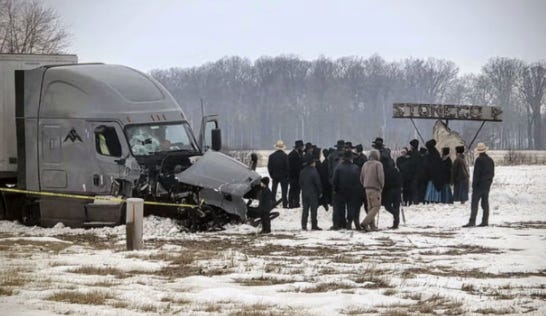
On February 3, Indiana State Police responded to a collision involving a semi-truck bearing a triangular logo. The driver, 30-year-old Bekzhan Beishekeev of Philadelphia, swerved instead of braking, crossed into oncoming traffic, and struck a Chevrolet van head-on.
The van was driven by Donald Stipp, 55, of Portland. With him were members of Bryant, Indiana’s Amish community: Henry Eicher, 50; his sons Menno, 25, and Paul, 19; and a family friend, Simon Girod, 23.
Henry, Menno, and Paul were pronounced dead at the scene. Simon died later at the hospital.
Dash cam footage:
The crash was not random but rather the tragic result of a regulatory structure that allows trucking companies to create new identities on demand, separating themselves from past safety performance while continuing to operate. In the industry, they are known as chameleon carriers.
Chameleon carriers collapse under various forms of oversight—enforcement actions, lawsuits, fraud allegations—then reopen under a different company name and a new U.S. Department of Transportation (USDOT) number. The USDOT identifier is supposed to tie a company to its inspection, insurance, and crash history. When the identifier changes but the operation does not, accountability and oversight dissolve.
If that sounds like corporate identity theft, it is. And this is a textbook case of it.
Following the Logo on the Truck
Photos from the Indiana crash showed a semi-truck bearing a distinctive triangular logo. To the average viewer, it was just another gray semi-truck. To those who closely track safety and compliance in the trucking industry, the logo was immediately recognizable.
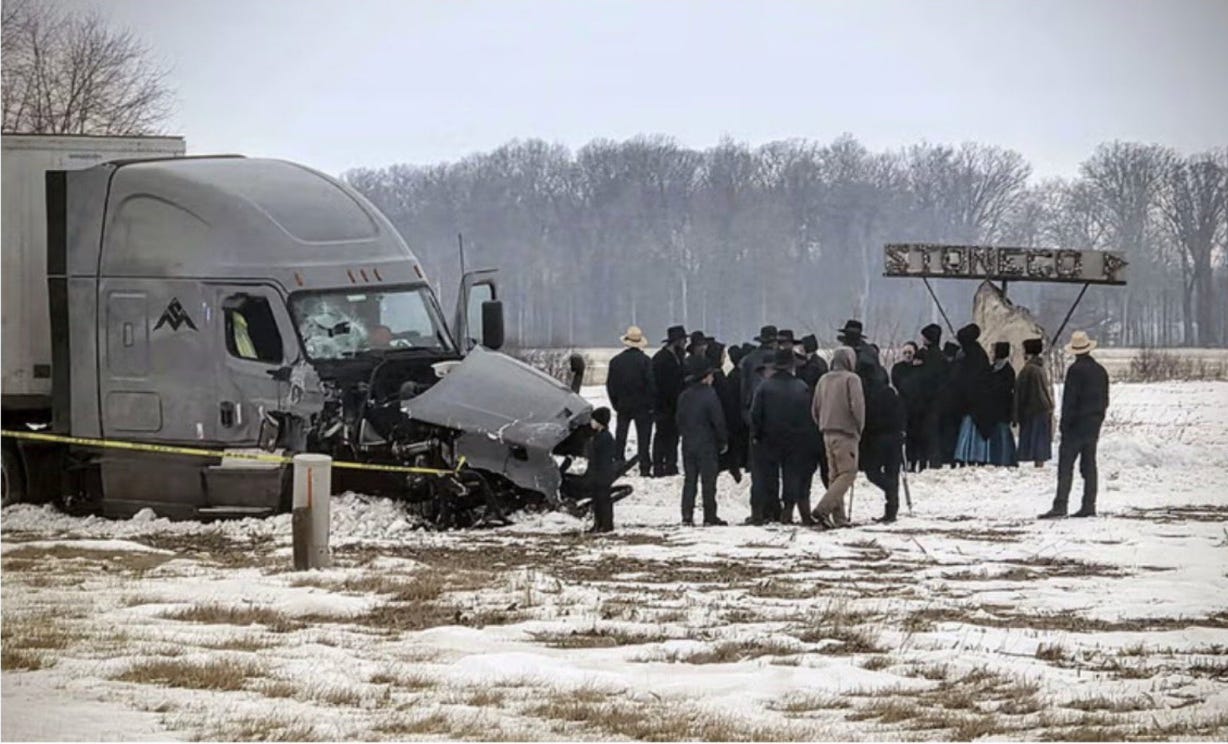
The symbol has surfaced repeatedly across a cluster of carriers that are legally separate yet appear to function as one. Determining which company controlled the truck should have been simple, but it wasn’t. When a company operates under multiple USDOT authorities, everything becomes complex.
The logo leads to Sam Express Inc. of Palatine, Illinois. Federal filings name Saipidin Tutashov as the primary officer.
Connected entities include Tutash Express Inc., Tutash Express 1 LLC, KG Line Group, AJ Partners LLC, and others. Officer listings across them repeat: Tutashov. Zhalaldin Uulu. Musaev. Murzapazylov. Arystankulov. In response to online posts by myself and others related to this network, Transportation Secretary Sean Duffy announced a formal investigation into AJ Partners and these related entities.


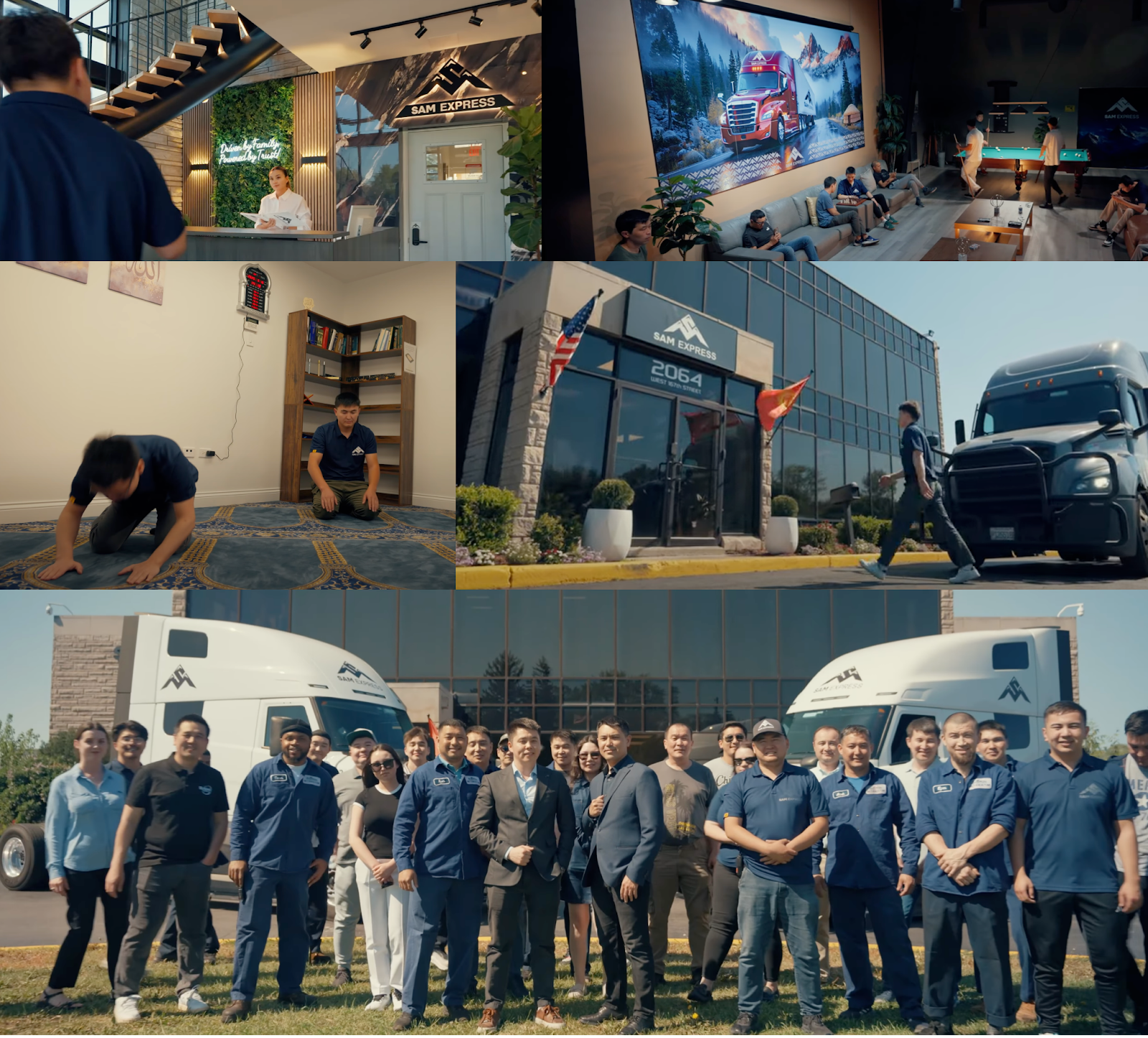
Sam Express’s public materials display Kyrgyzstan’s country code, +996, alongside American and Kyrgyz flags.
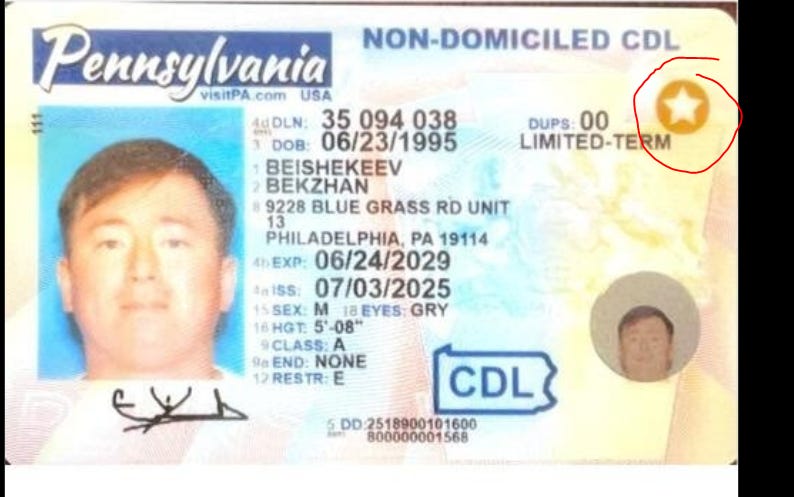
The driver in the Indiana crash, Bekzhan Beishekeev, is also Kyrgyz. He crossed the U.S. border in 2023 using the Biden-created CBP One phone app and received a non-domiciled commercial driver’s license (CDL) from the state of Pennsylvania last year:
At some point, coincidence strains credibility. For clarity, this article refers to the interconnected companies as the KGZ Outfit.
From One Truck to 500
In a recorded interview, the owner recounts coming to the United States as a student and growing the company from a single truck in 2019 to a fleet of more than 500 trucks by 2025. The story is framed as an immigrant success narrative: hard work, growth, and a business built from the ground up.
Growth at that speed is not illegal. But in an industry that, over the last few years, has seen freight rates collapse, thousands of small and mid-sized carriers exit the market, and widespread bankruptcies, rapid expansion on that scale invites trouble and demands intense scrutiny.
Another company video offers further insight into how that growth was sustained regarding driver recruitment: “Drivers from the CIS countries often work harder and push themselves more, and they reach their goals faster than the average American. I’m proud of that.”

Taken together, the videos outline two pillars of the model: fast fleet growth and a defined labor pipeline. What sounds celebratory also reveals the stress behind it. In this industry, pushing harder often becomes extended duty time, narrower safety buffers, and compliance programs stretched to their limits.
Combine that with equipment, authorities, and liability quietly rotating behind the curtain, and the risk is no longer abstract. It materializes on public roadways.
A Network Built to Shift Risk
Federal registration data shows how closely the KGZ Outfit companies are linked.
AJ Partners LLC shares 127 VINs with Tutash Express Inc. The same trucks were inspected under different carriers 127 times. Many of those VINs also appear under KG Line Group.
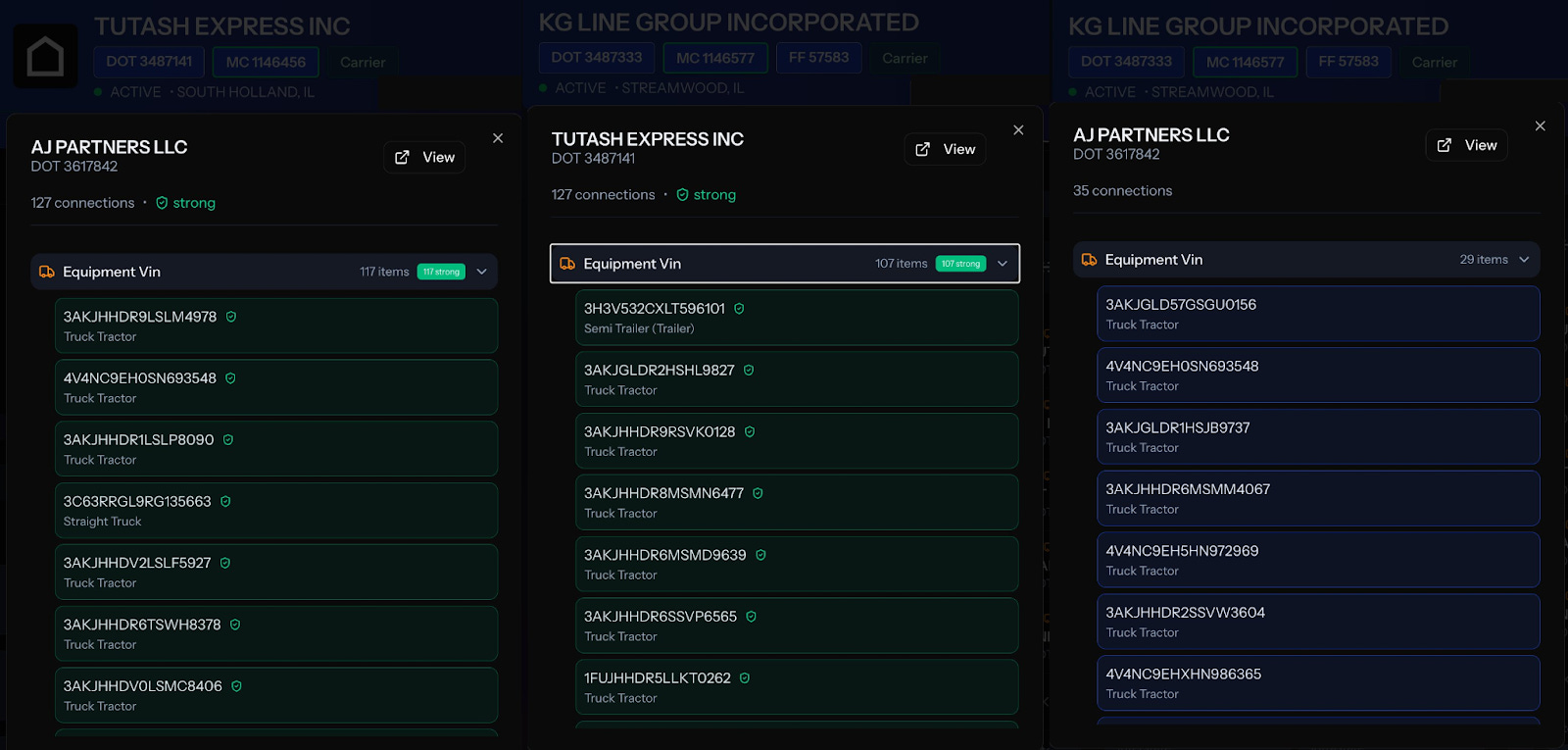
Image from SearchCarriers.com
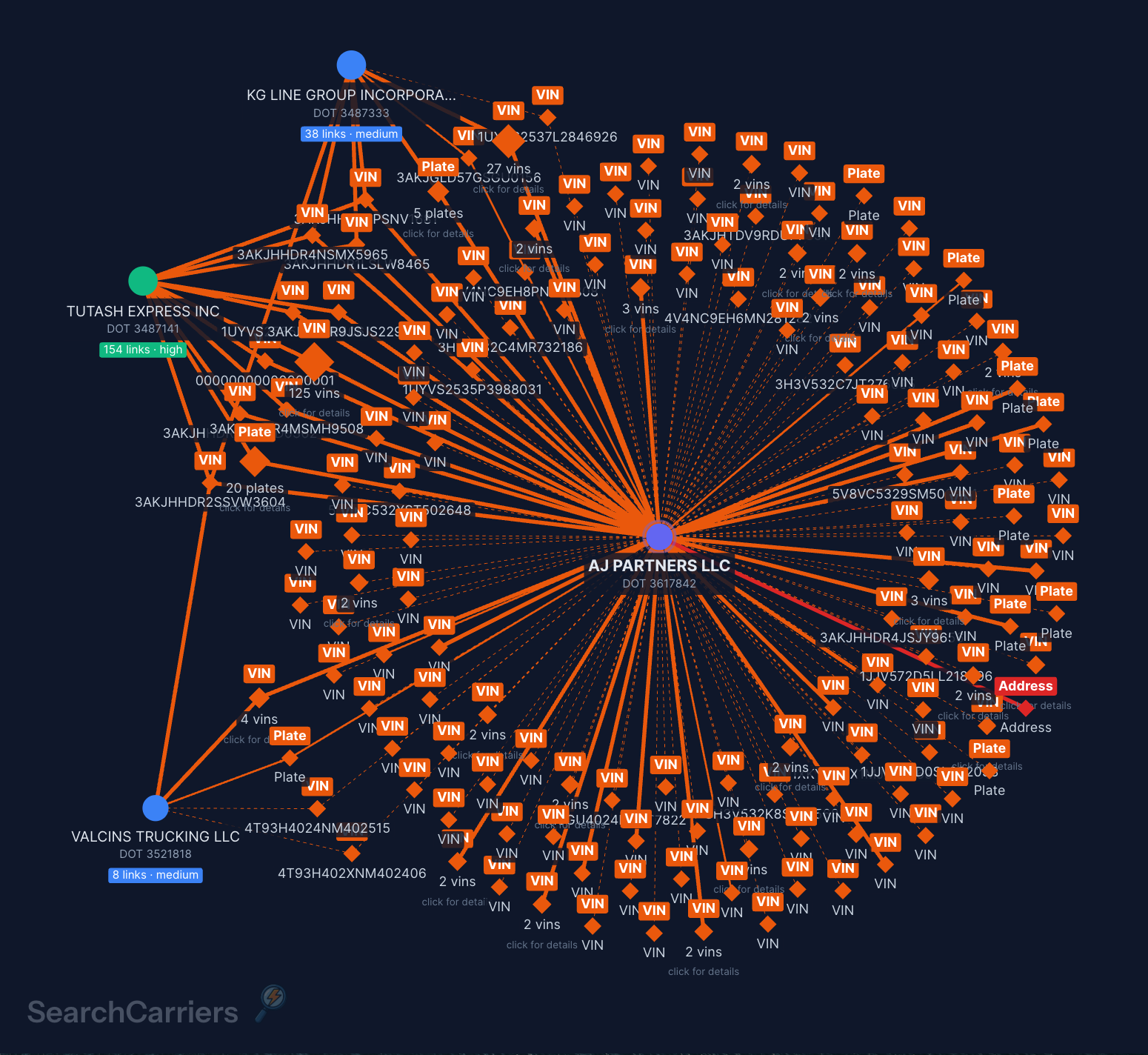
Image by SearchCarriers.com
A review of the network’s history shows the public safety hazard posed by their presence on the road. Out of 2,775 inspections, AJ Partners received 1,454 violations and 414 out-of-service orders. Drivers were involved in 80 crashes. Those figures exceed national averages for both vehicle and driver out-of-service rates.
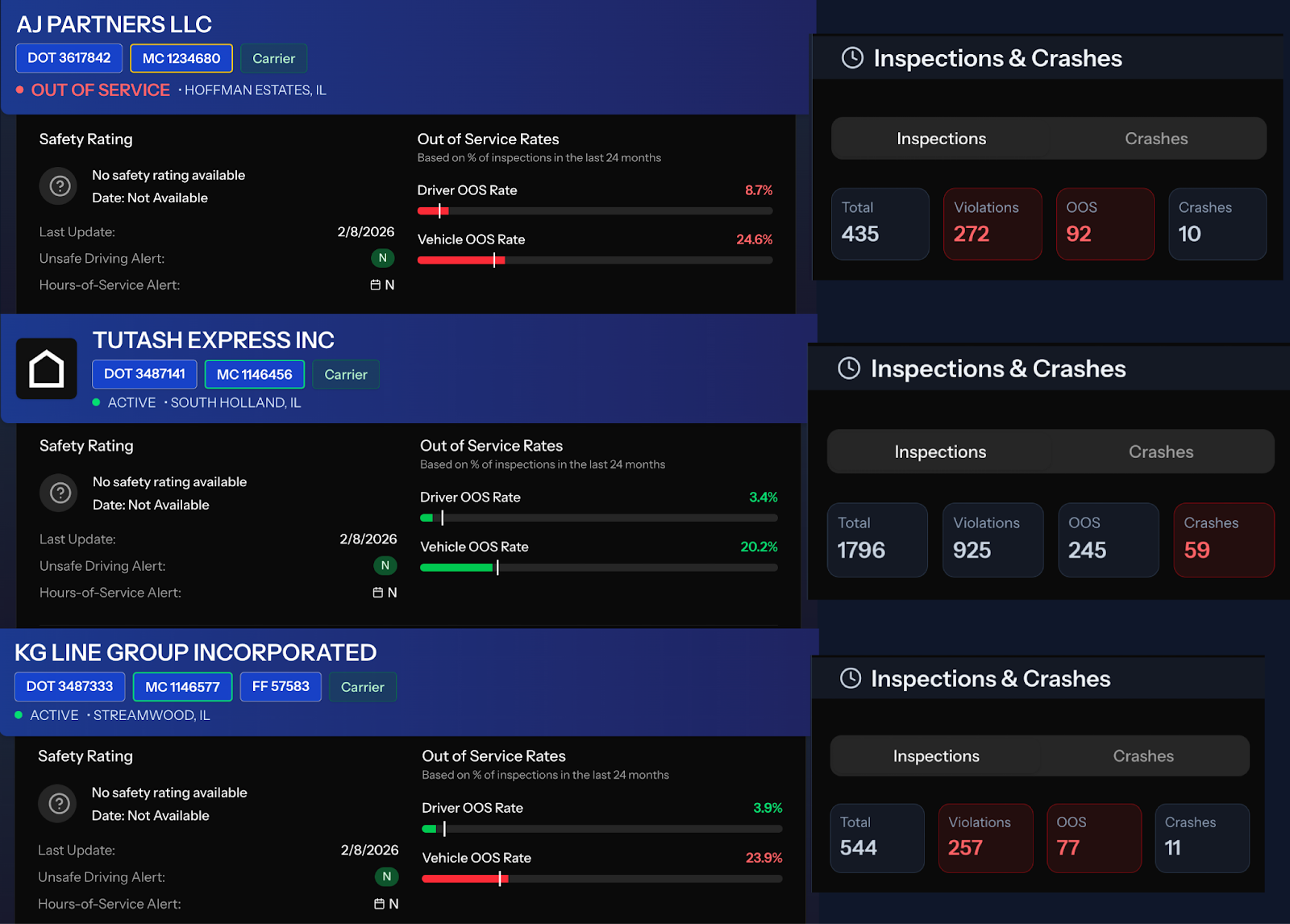
Images from SearchCarriers.com
Inspectors also documented 50 instances in which drivers were removed from service for failing to meet English-language requirements.
Tutash — 12
KG Line Group — 2
AJ Partners — 9
Bitsharp Corporation — 17
Globe Transportation — 10
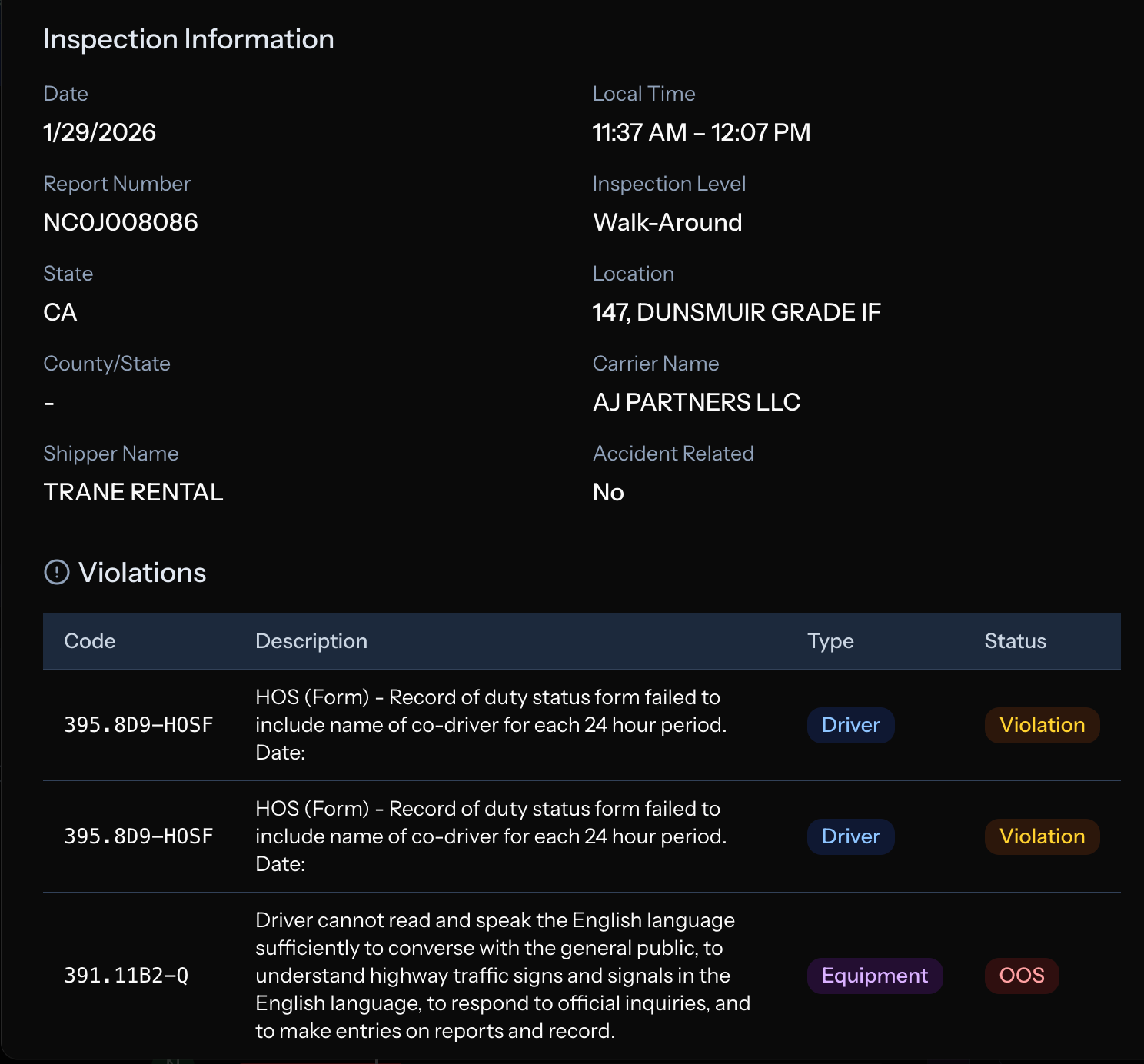
Image from SearchCarriers.com
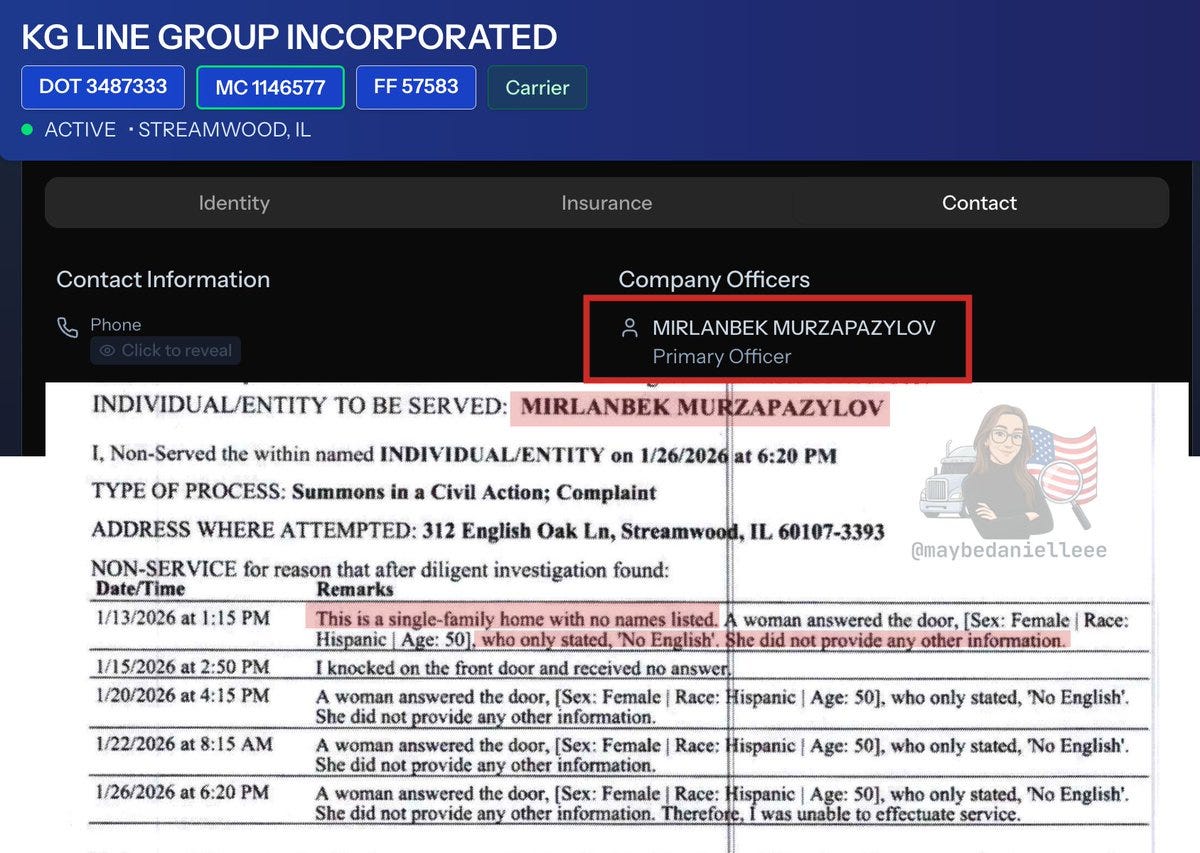
Also of concern, and something that should catch the eye of federal investigators, is that several companies report their headquarters at residential properties. KG Line Group, for example, lists a single-family home in suburban Illinois while claiming hundreds of trucks and drivers.
For an operation of that size, regulators expect the personnel machinery of compliance to be in place; that would include employees tasked with records management, maintenance oversight, insurance coordination, and people available to receive regulators and/or attorneys upon arrival.
A private residence does not automatically mean wrongdoing; in fact, many small carriers legitimately run one or two trucks from home. However, with hundreds of trucks, the address can indicate a gap between what is on paper and what is in practice.
All of this comes from public FMCSA data. The Federal Motor Carrier Safety Administration (FMCSA), the agency that regulates interstate trucking, maintains a public database of carrier registrations, inspections, crashes, and enforcement actions that the industry relies on to measure safety and legality. Taken together, the record shows repeated warning signs that went unaddressed.
What Sam Express Says
In Sam Express’s promotional material on YouTube, a company far removed from what appears in federal records is on display. (The company’s YouTube videos were made private following the crash.)
By its own description, Sam Express Inc. is driver-first, built by people who “lived the driver’s life,” grounded in respect and transparency. The video shows showers, halal meals, hotel-style rooms, lounges, and even a gym. The promise is more than employment, it’s a route to the American dream!
“That’s why our mission has always been simple. Take care of our drivers the way no one else did for us. … We treat our drivers like family… we stand beside our drivers, offering real support and clear opportunities for growth.”
Those claims are designed to build trust, to attract more drivers. But when that narrative is placed alongside federal data and court filings, the contrast is stark.
Current Litigation Tells More of the Story
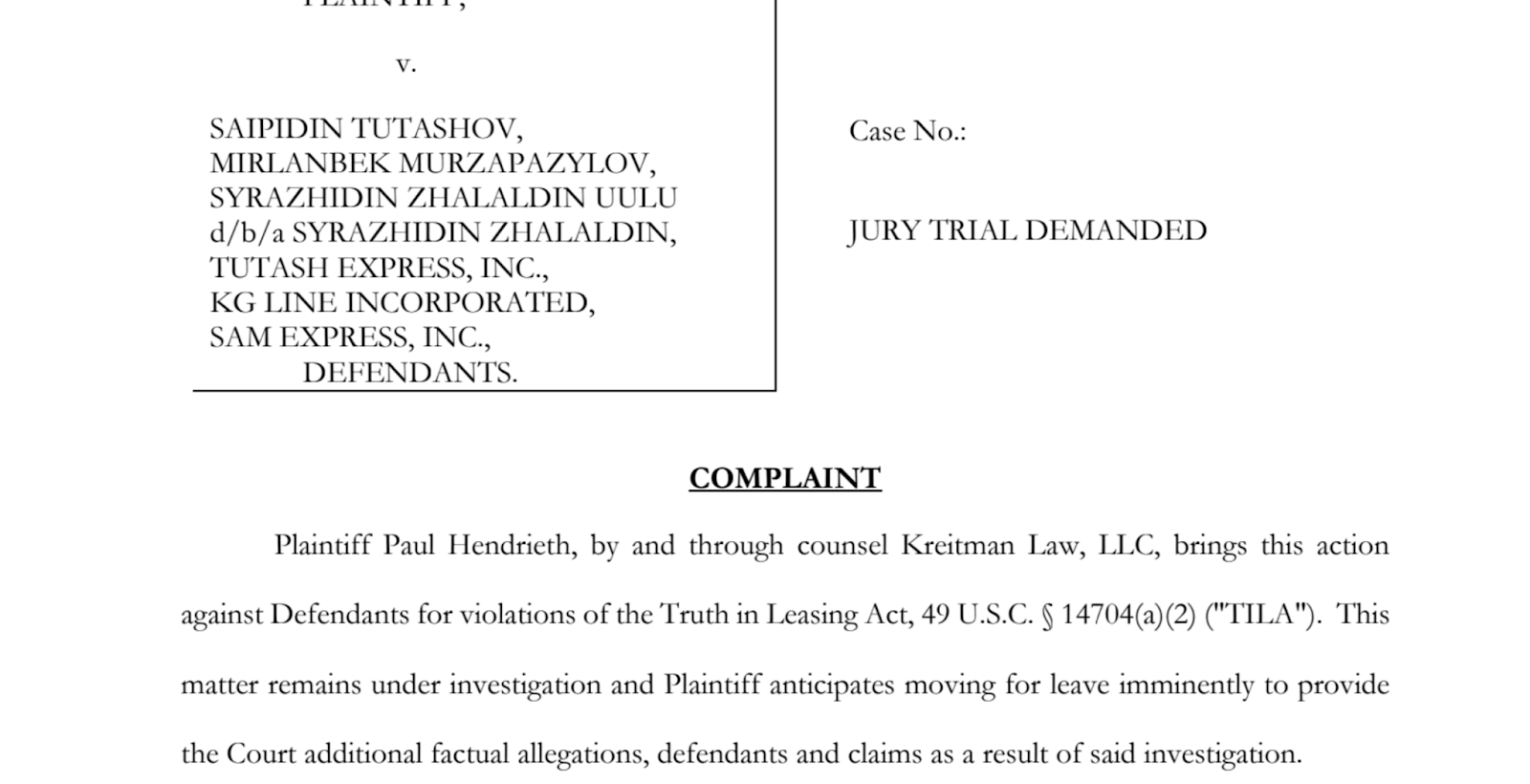
Months before the crash, companies tied to Sam Express Inc. were named in a federal civil action in the Northern District of Illinois. This case is not built around a tragic accident but raises the question of whether companies presented as separate businesses operated as a single enterprise, controlling drivers like employees while classifying them as independent contractors on paper.
The complaint alleges the enterprise rotated drivers and equipment among multiple USDOT authorities, including Tutash Express, Inc., and KG Line Incorporated. This is the chameleon carrier framework described earlier, which allows operations to continue while reducing scrutiny, avoiding blacklists, and limiting exposure to liability.
Sam Express recruits drivers with familiar promises: high pay percentages, dispatch support, compliant operations, and valid insurance coverage. The plaintiff says he was promised 88% of the revenue from each load he hauled. According to the lawsuit, however, the documents needed to confirm that pay was never provided.
Federal Truth in Leasing regulations require transparency in these arrangements. When compensation is tied to a percentage, the driver must be able to verify the figures used to calculate pay, typically by accessing rate confirmations or comparable freight documentation.
Without those documents, a driver has no independent way to determine what a shipment actually paid or whether the promised percentage was honored. The entire compensation system rests on information controlled by the trucking company.
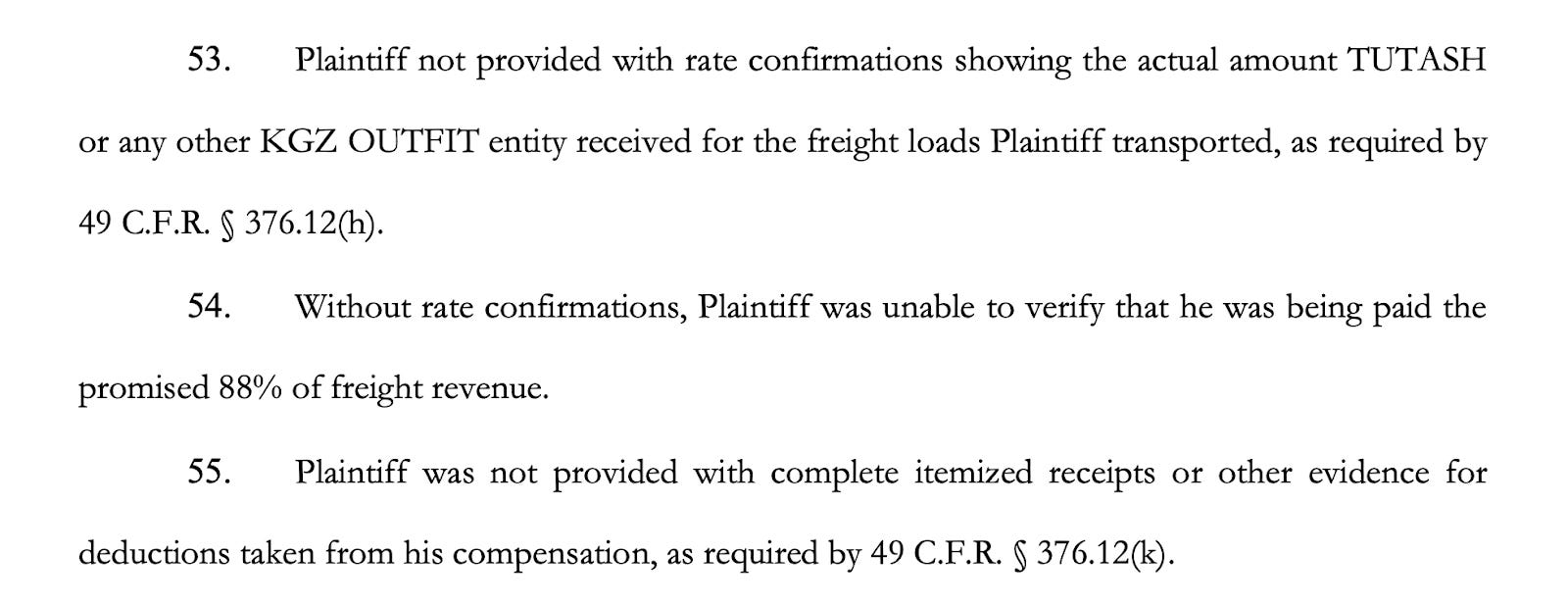
Despite that, the complaint says deductions continued to appear in weekly settlements. Charges were taken for fuel, insurance, dispatch services, repairs, and electronic logging systems. The driver alleges that many of these amounts were withheld without the required receipts or supporting documentation under federal rules.
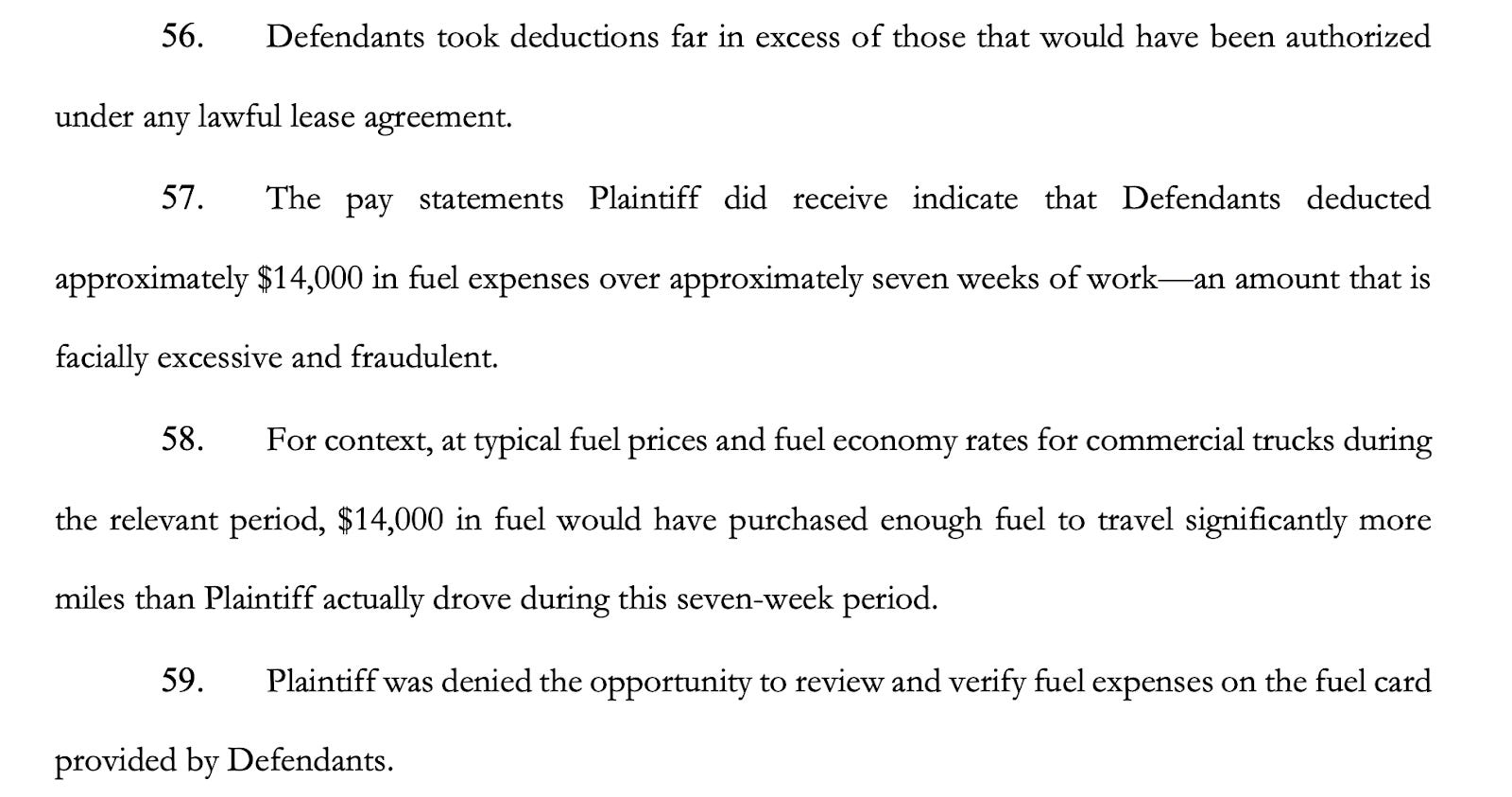
One example cited in the filing involves approximately $14,000 in fuel deductions over roughly seven weeks. Based on the mileage reportedly driven and average diesel prices during that period, the totals do not align with what the truck could reasonably have consumed.
Labor advocates, regulators, and attorneys say conflicts like this surface repeatedly in parts of the industry. They argue that some 1099 drivers can become responsible for layers of expenses that steadily shrink, and, in some cases, overwhelm expected earnings, particularly when the company maintains strict control over the underlying revenue records.
Another core allegation addresses how trucks and drivers moved through the web of companies. The complaint says drivers were moved between operating authorities, with loads dispatched under one carrier while insurance policies and electronic logs were tied to another.
According to the filing, drivers were not always sure which company they were legally working for at any given time or whether the coverage they were paying for would hold if a crash happened. The trucks, however, kept moving.
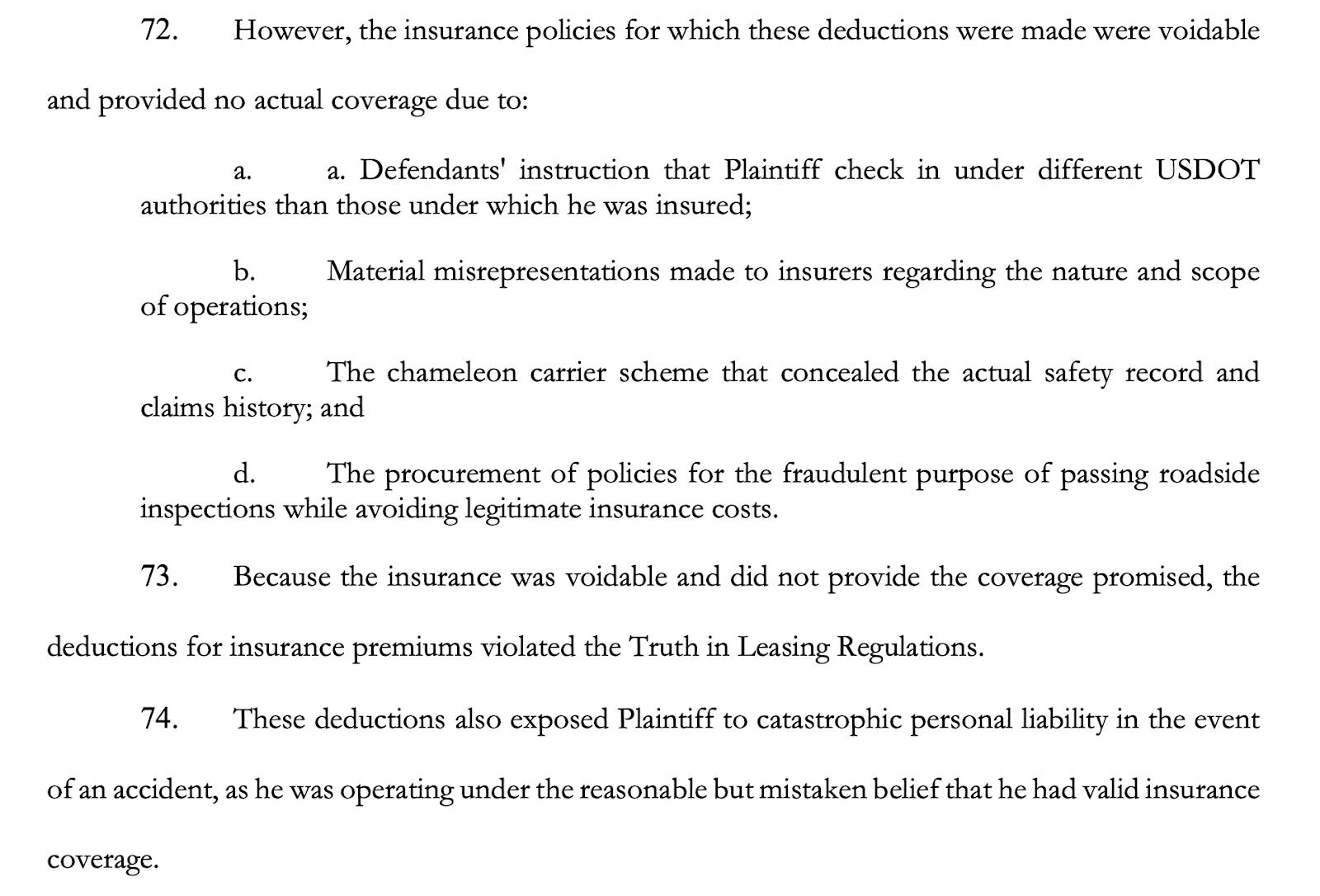
Insurance is the last barrier between a wreck and financial devastation. The lawsuit contends those policies, funded through driver deductions, could be disputed or denied if the vehicle operated outside the authority named on the paperwork.
If proven, the consequences would not stop with the carrier. They would ripple outward to drivers, shippers, and the public sharing the highway.
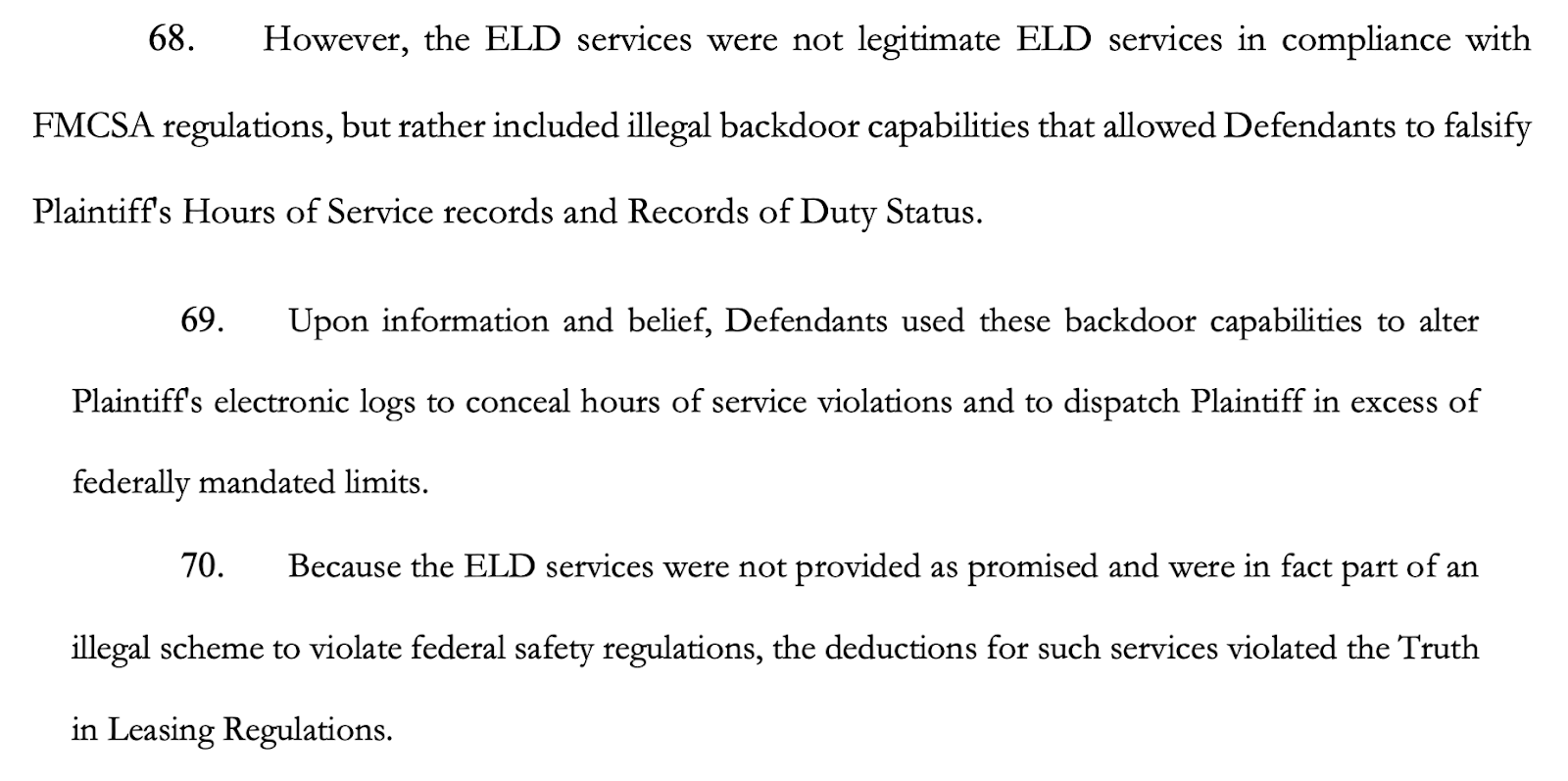
The lawsuit also targets the integrity of the electronic logging devices, or ELDs, used across this network. ELDs are designed to automatically record when a truck is moving, how long a driver has been behind the wheel, and when mandatory rest breaks occur. Regulators treat them as a primary defense against fatigue, one of the most studied risk factors in serious crashes.
The complaint, however, alleges that back-end access allowed records to be changed. Across the trucking industry, safety officials have long warned that digital logs can be manipulated. From resetting hours to give the driver a fresh shift, to adding a co-driver who is not actually in the cab. On paper, everything looks compliant, even as illegal driving continues.
Set beside the company video referenced earlier, in which an owner of Sam Express, Inc. praised drivers for pushing harder and reaching goals faster, the allegation prompts a broader question. When companies celebrate speed and long hours, what happens to public safety if the federal rules meant to protect it are blatantly ignored?
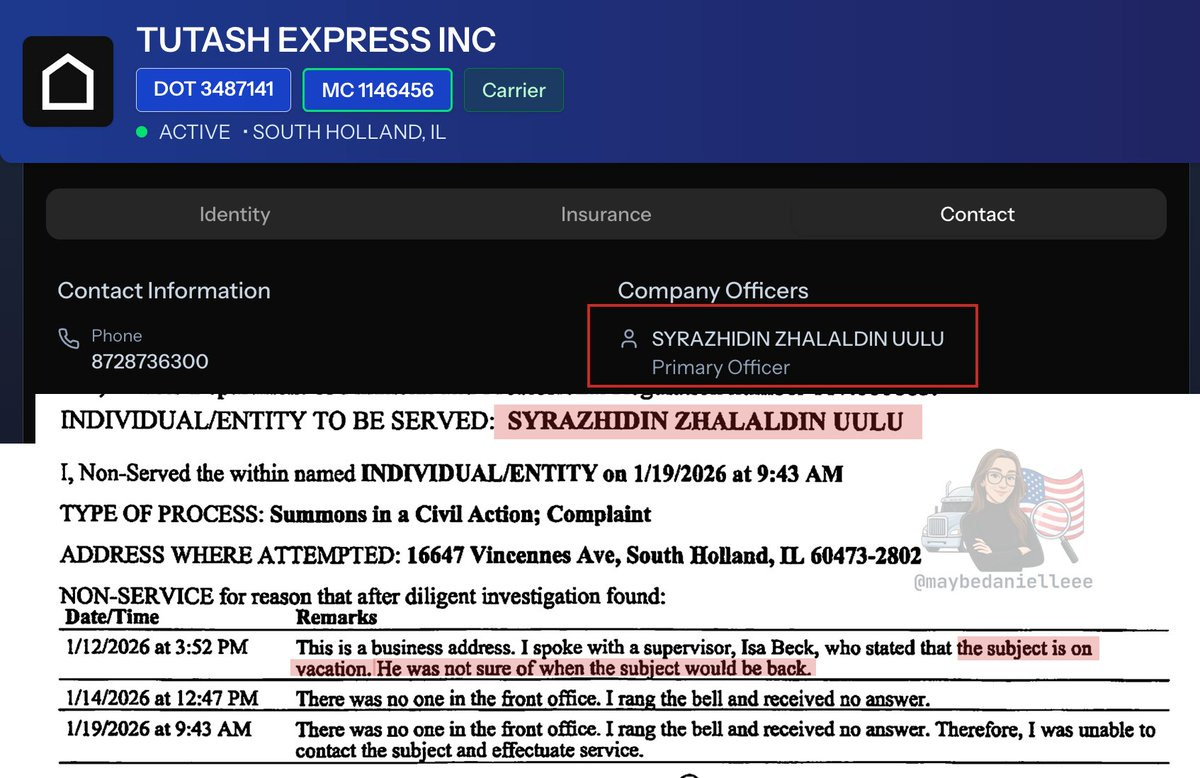
When legal notices needed to be served, process servers reportedly ran into trouble. Some addresses led to empty offices. At others, no one seemed certain who was responsible. Service failed for multiple defendants. By itself, that may prove little.
Placed within the larger pattern alleged in the case, it’s familiar. Available to haul freight, harder to pin down when accountability arrives.
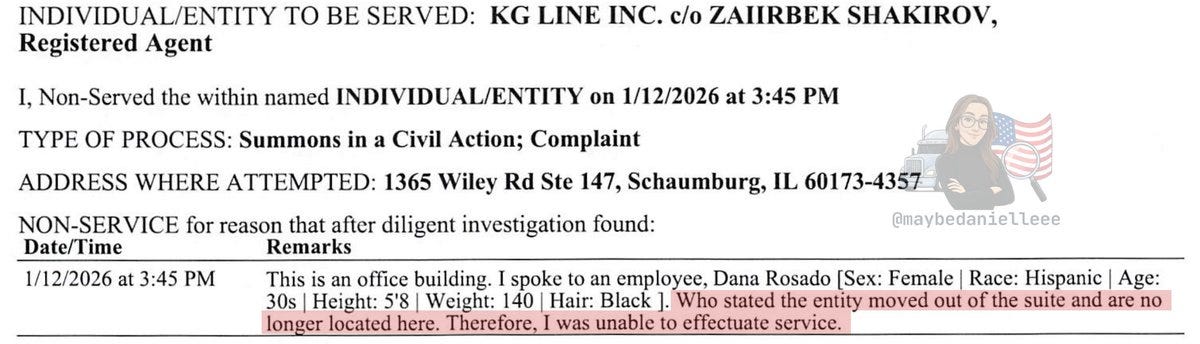
Network of Companies, Network of Issues
Foreign-born drivers are not the sole issue, nor is where a CDL is issued. International recruiting is legal, and nearly one in five U.S. drivers was born abroad. But when overseas hiring appears beside shared trucks, rotating authorities, revoked carriers logging miles, high out-of-service scores, and a rising crash count, coincidence becomes a difficult defense.
When a federal system allows companies like Sam Express to operate as they do, tragedies like Jay County become much more likely.
By the time of the crash, the red flags on this operation were clearly visible.
Four people died anyway. They didn’t need to understand trucking regulations to be affected by them. They didn’t need to know what a DOT number was or how chameleon carriers operate.
They only needed the system designed to protect them to work.
It did not.
Some federal lawmakers also want to investigate chameleon carriers. Here is Wyoming Representative Harrier Hageman last week:

Looks like Blue states might be handing out Real IDs to anybody. This guy "crossed the U.S. border in 2023 using the Biden-created CBP One phone app and received a non-domiciled commercial driver’s license (CDL) from the state of Pennsylvania last year."
I guess he got a green card somehow while claiming to live outside the US. That puzzles me.
Fascinating article. Corruption everywhere.
As a PA resident, I noticed this driver has a gold star on his license. That license is a REAL ID. Think about that.
I mourn the needless deaths.