

Last month, five Venezuelan migrants were arrested for stealing $2 million in merchandise from an Indianapolis jewelry store. According to police reports, three men and two teenagers conducted the brazen armed robbery in the middle of the day, tying up the owner with duct tape then leading police on a cross-county chase that ended in their capture. Indiana law enforcement officials say the perpetrators, who reside in Chicago, are members of Tren de Aragua, the notorious multi-national gang designated a foreign terrorist organization by the Trump administration last year.
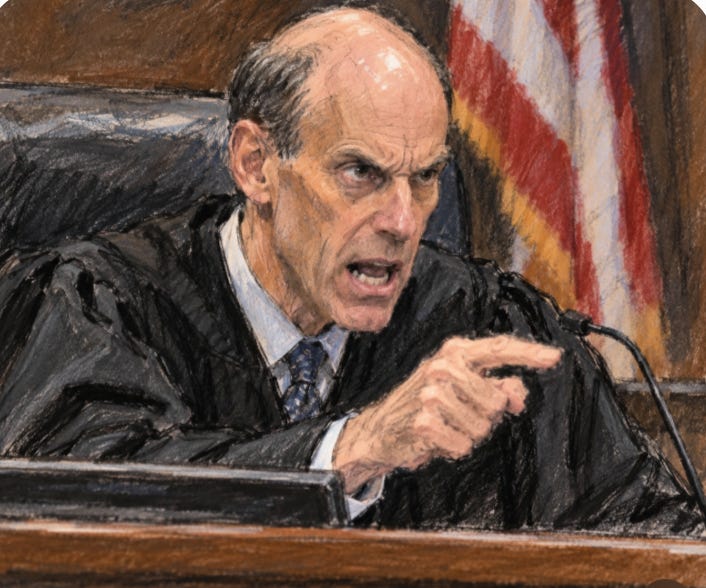
Unfortunately, the migrants—all five now have detainers courtesy of immigration officials—were protected from summary deportation after a series of federal judges determined the president’s Alien Enemies Act (AEA) proclamation violated the due process of the gang bangers; in March 2025, President Trump signed the AEA ordering the immediate removal of Venezuelan illegals suspected of ties to Tren de Aragua. That same day, James Boasberg, the chief judge of the D.C. District Court, signed a restraining order halting the president’s proclamation. The matter, now 18 months later, is still stalled in the federal court system.
It’s hard to determine how many crime victims would have been spared if the president’s proclamation had remained intact without interference by judges across the country. (The issue is headed back to the Supreme Court, which claimed last year the AEA did not provide “due process” rights for the illegals.) Attorney General Todd Blanche recently announced that at least 350 Tren de Aragua members have been arrested since Trump took office; crimes range from murder and kidnapping to sex trafficking.
But the final word on the lawfulness of the AEA isn’t the only thing hanging around—so, too, is the ludicrous contempt case initiated by Boasberg in April 2025. The full D.C. appellate court will hear arguments on Tuesday as the Trump DOJ again asks the court to shut down the contempt proceedings once and for all, or force Boasberg to submit the written criminal referral he has threatened for months.
As I covered here and here, Boasberg continues to insist that administration officials defied his “verbal” order to bring back two planes carrying TdA members out of the country on the evening of March 15. While some AEA subjects were not removed that weekend as planned, the departed planes, which were over Central America when Boasberg made his demand, were not returned.
Who Actually is Guilty of Contempt?
That infuriated Boasberg; the following month, Boasberg determined that “the Government’s actions on that day demonstrate a willful disregard for its Order, sufficient for the Court to conclude that probable cause exists to find the Government in criminal contempt.” He informed the DOJ that he would “purge” the contempt proceedings if the men, who were detained in El Salvador at the time, were brought back to the U.S.
The DOJ fought the contempt findings and refused to return the illegals. The battle continued, resulting in two separate rulings by D.C. appellate court panels to vacate Boasberg’s contempt case. Judge Gregory Katsas, a Trump appointee, admonished Boasberg for creating a “‘constitutional confrontation’ between the Executive and Judicial Branches.” (Keep in mind, the Supreme Court had already reversed Boasberg’s restraining order, determining he did not have proper authority to do so.)
But Boasberg marched onward, undeterred. Concluding a sworn declaration by then Homeland Security Secretary Kristy Noem related to her decision-making process was insufficient—and engaging in his own sort of contempt of court—Boasberg issued yet another order to schedule an interrogation of the top prosecutor in the AEA case as well as a self-described “whistleblower” who claimed top DOJ officials conspired to ignore court orders related to immigration enforcement. Boasberg even authorized cross-examination by the illegals’ ACLU-based lawyers.
“No authority exists for a federal judge to hold a mini-trial dedicated to uncovering and assessing evidence of criminal intent,” the DOJ wrote in its appellate brief. “The investigation and prosecution of crimes is an Executive Branch prerogative. Such a freewheeling, quasi-inquisitorial, quasi prosecutorial inquest is wholly foreign to centuries of Anglo-American law and our separation of powers, and the [DC appellate] panel was right to put a stop to it.”
Whether the full court, where Democratic appointees including the chief judge enjoy the majority, agrees is another story. But the mere fact that this charade continues more than 18 months later speaks not just to Boasberg’s deep partisanship but the lack of higher courts to successfully rein him in.
I will update this article soon with tidbits from today’s hearing.
Looking forward to your updates👍
Utterly insane all of it
"...the mere fact that this charade continues more than 18 months later speaks not just to Boasberg’s deep partisanship but the lack of higher courts to successfully rein him in." 😠😡🤬